
What Gives Indigo Salt Its Colour
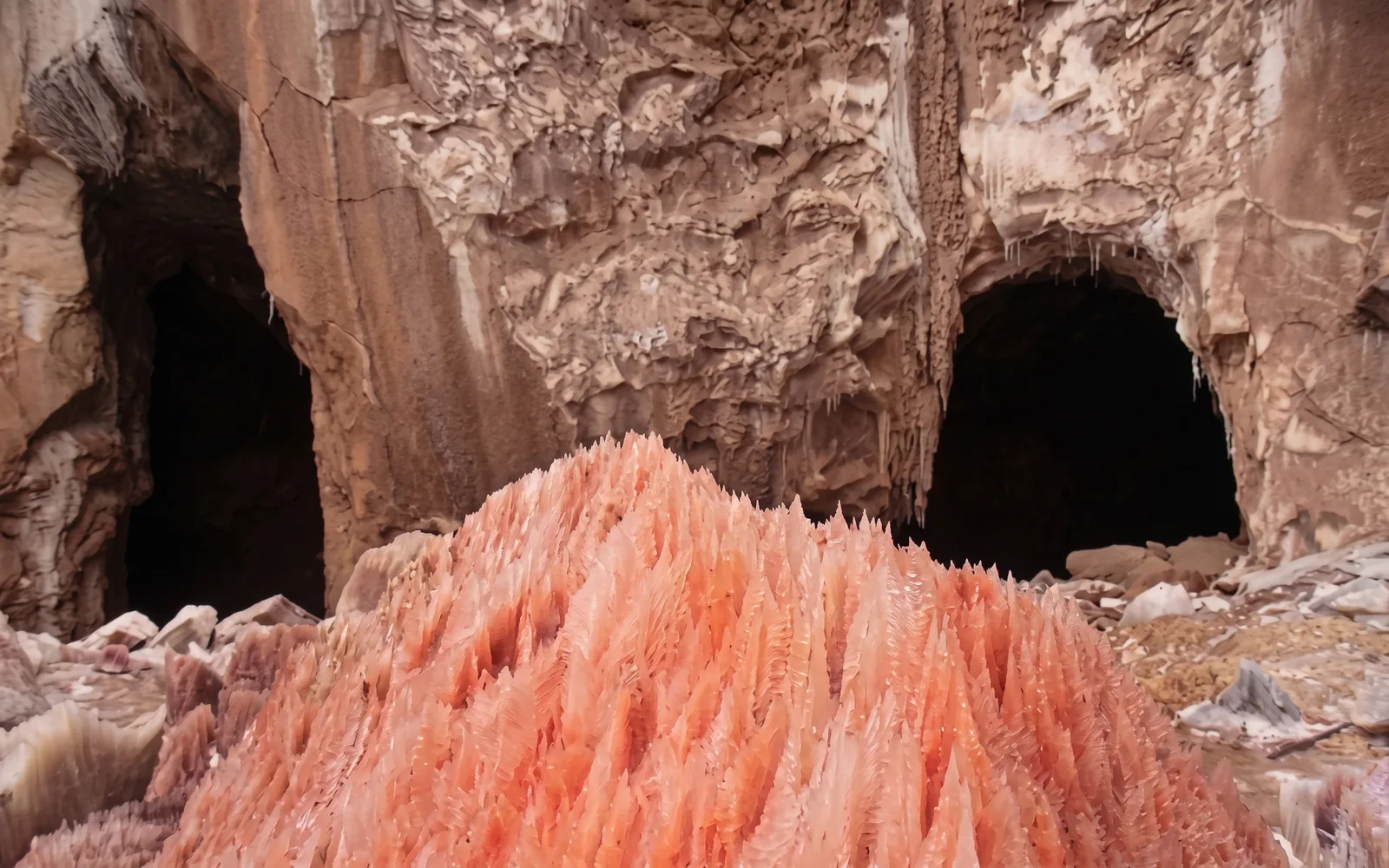
Pure halite is usually colourless or white. Yet some natural salt crystals appear pale blue, violet or deep indigo. The colour is not painted onto the surface and does not need an added dye. It develops inside the crystal.
Research on blue halite links the colour to changes and defects within the crystal lattice. At an atomic scale, these structures can create colour centres that alter which wavelengths of light are absorbed. The light that returns to the eye can make the crystal appear blue or violet.
Several mechanisms have been studied in blue halite, and the explanation can differ between deposits. This is why the safest public description is also the clearest: rare structural changes formed over geological time affect how the crystal interacts with light.
The colour is often uneven. One piece may contain a sharp indigo zone inside a clear cube. Another may be cloudy, fractured or only faintly blue. When a strongly coloured crystal is crushed, the colour is dispersed across many smaller grains, so the resulting salt may look white or pale with only small indigo points remaining.
That variation is part of the attraction. The crystal records a natural geological process rather than a controlled colour formula.
Sources & further reading